From ISR to AI: Why Veterans Belong in Canadian Defence Technology
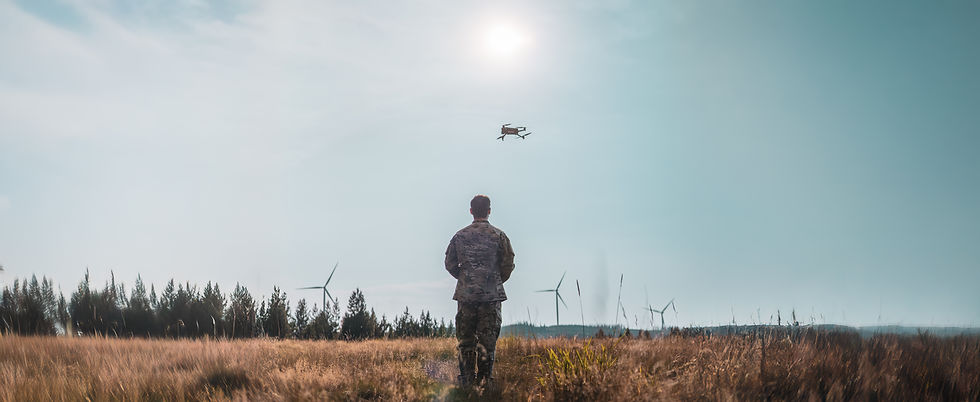
Bridging battlefield experience and AI-driven sensing to strengthen situational awareness

When I left the Regular Force after 32 years as an Armoured Recce soldier, I thought I was walking away from ISR.
I wasn’t. I was just changing the tools.
ISR (Intelligence, Surveillance, and Reconnaissance) had been my world for decades: long nights watching sensor feeds, conducting pattern-of-life analysis, and learning to notice what didn’t belong. In uniform, the mission was simple: better awareness protects lives.
After transitioning into Canada’s private defence sector, I realized something quickly: AI is becoming the next-generation sensor.
The fundamentals of ISR haven’t changed. Information still needs to be timely, relevant, and reliable. What has changed is scale. Modern sensing systems now generate more data than any team of operators can reasonably process alone. AI-enabled defence technology helps surface what matters faster, more consistently, and in ways that support real-time decision-making.
But that only works when the technology is built with operational realities in mind.
The future of Canadian defence AI will be strongest when it is shaped by people who understand the realities of the battlespace, not just the possibilities of the technology.
Veterans and reservists bring direct experience from intelligence and surveillance environments into defence technology development. We understand how situational awareness products are used in the field, what becomes actionable, and what quickly turns into noise. More importantly, we understand how quickly trust erodes when systems produce unreliable outputs or overload the operator.
That experience is critical when building AI-driven ISR systems and decision-support platforms.
At TerraSense, through MIST and advanced sensing solutions, the work centres on helping operators interpret complex environments faster and with greater confidence. AI should reduce cognitive load, improve detection accuracy, and strengthen situational awareness for those still serving.
Canada’s national security depends on advanced defence technology. It also depends on ensuring that technology reflects real operational needs. Integrating veterans into Canadian defence SMEs helps close the gap between system design and field deployment.
Leaving the military does not mean stepping away from protecting the nation. For many of us, it means contributing to Canadian defence innovation in a different capacity.
While the environment changed, the responsibility I carry did not.
Comments